
The short answer
An accent wall is a good choice when a room has a natural focal point, like the wall behind a bed or sofa, or when you want a bold pattern without papering the whole room. We repair, smooth, and prime the wall, then measure, plumb, pattern-match, seam, and trim each strip. Cost depends on wall condition, paper type, pattern repeat, and wall size.
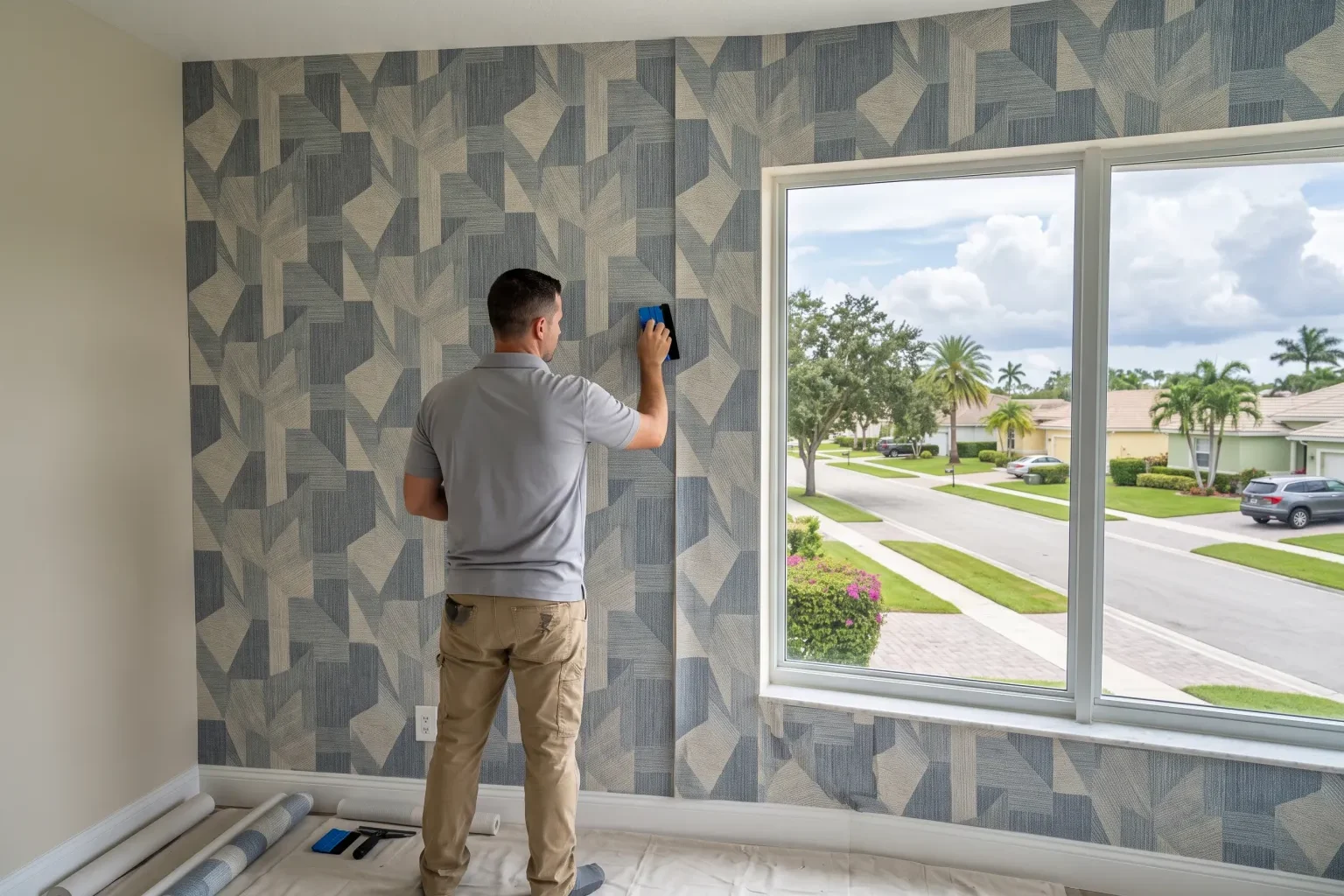
An accent wall puts wallpaper on one surface of a room instead of all four. It adds pattern, texture, or color without committing an entire space to a bold design, and it usually takes less material and less time than a full-room job. Luxury Wallpaper Installer hangs accent walls for homeowners in Sunrise and nearby cities across Broward County. This page explains when a single papered wall makes sense, how we prepare the surface, what happens on installation day, what drives the cost, and how to keep the finished wall looking good.
When an Accent Wall Is the Right Choice
An accent wall works best when a room already has a natural focal point. The wall behind a bed, the wall a sofa faces, a dining room wall that frames a table, or the back of a built-in bookcase are common choices. Paper on one of these surfaces draws the eye where you want it and leaves the rest of the room calm.
It's also a good fit when you love a pattern that would feel heavy across a whole room, or when you want to try a style before committing to more. Small spaces like powder rooms, entryways, and home offices often benefit too, since one papered wall can add character without making the room feel closed in.
An accent wall may not be the right call if the room has no obvious feature wall, if every wall is broken up by doors and windows, or if the wall you have in mind has moisture problems that need to be fixed first.
- Behind a headboard in a primary or guest bedroom
- Behind a TV or fireplace in a living room
- One dining room wall facing the entry
- A powder room vanity wall
- The back of a niche, alcove, or open shelving
How We Prepare and Prime the Wall
Wallpaper shows every flaw underneath it, so most of the work on a good accent wall happens before the first strip goes up. We start by checking the wall for cracks, nail holes, dents, peeling paint, old adhesive, and signs of moisture. In South Florida homes, it's worth looking closely at exterior walls and walls shared with bathrooms, since the long, humid wet season from May through October can leave hidden dampness behind.
Next we repair and smooth the surface. That can mean patching holes, skim-coating rough areas, sanding, and removing any old wallpaper and its residue. Heavily textured walls usually need skim-coating so the texture doesn't show through the paper.
Once the wall is smooth, clean, and dry, we apply a primer made for wallpaper. It helps the adhesive grip evenly, gives us working time to slide strips into position, and makes the paper much easier to remove later without damaging the drywall. We let the primer cure fully before hanging.
We also cover floors and nearby furniture, remove outlet and switch covers, and set up a clear work area.
The Installation Process, Step by Step
Every accent wall follows the same basic sequence. Doing each step in order is what keeps the pattern straight and the seams tight.
- Measuring: We measure the wall's width and height at several points, note windows, outlets, and other cutouts, and confirm how much paper is needed based on the pattern repeat. We also check that all rolls come from the same batch, since color can vary slightly between print runs.
- Planning the layout: We decide where the pattern should sit, usually centering a key motif on the wall or on a feature like a bed or fireplace. We also figure out where seams will fall so none land in an awkward spot.
- Plumbing a line: Walls and corners are rarely perfectly straight, so we mark a true vertical line with a level or laser and hang the first strip to that line, not to the corner.
- Pattern matching: Each strip is cut with extra length and lined up with the one beside it so the design flows continuously. Straight-match, half-drop, and random-match papers each need a different approach.
- Seams: We butt strips edge to edge, roll the seams gently, and wipe away excess adhesive right away. The goal is seams you have to look for to find.
- Trimming: Once the paper has settled, we trim the top, bottom, and side edges with a sharp blade and straightedge, cut neatly around outlets and switches, and reinstall the covers.
- Final check: We look over the wall in different light, smooth any bubbles, and clean up the work area.
What Affects the Cost
Every accent wall is quoted individually, because a few factors change how much time and material the job takes. We'll walk through these with you during the estimate so you know what's driving the price before any work starts.
- Wall condition: Smooth, sound walls go faster. Texture, damage, old wallpaper, or moisture repairs add prep time.
- Paper type: Prepasted, unpasted, peel-and-stick, grasscloth, vinyl, and hand-printed papers each handle differently. Delicate or natural-fiber papers take more care and time to hang.
- Pattern repeat: Larger repeats and drop matches create more waste per strip, so you may need extra rolls.
- Room size and ceiling height: A taller or wider wall needs more paper and more strips. Very tall walls and stairwell walls may require scaffolding or extra ladders.
- Cutouts and details: Windows, doors, outlets, built-ins, and angled ceilings call for more precise cuts.
Caring for Your Finished Accent Wall
Most wallpaper needs a little time to fully settle after installation. Avoid hanging art, scrubbing, or pushing furniture against the wall for the first few days.
For routine cleaning, dust the wall with a soft, dry cloth or a vacuum brush attachment. Washable and scrubbable vinyl papers can be wiped gently with a damp sponge and mild soap. Grasscloth and other natural papers should only be dusted. Always test a hidden spot first.
Humidity matters here. Keep the air conditioning running steadily, especially from May through October, and use the exhaust fan in powder rooms. If you close up the house or lose power during hurricane season, which runs June 1 through November 30, check the wall afterward for lifting edges or seams. Small lifts can often be reattached with seam adhesive before they spread.
Keep a leftover piece of paper and note the batch number. If a section is ever damaged, that makes a patch much easier.
Accent Wall Installation by city
- Accent Wall Installation in Lauderhill
- Accent Wall Installation in Plantation
- Accent Wall Installation in Lauderdale Lakes
- Accent Wall Installation in Tamarac
- Accent Wall Installation in North Lauderdale
- Accent Wall Installation in Davie
- Accent Wall Installation in Fort Lauderdale
- Accent Wall Installation in Oakland Park
- Accent Wall Installation in Wilton Manors
- Accent Wall Installation in Cooper City
- Accent Wall Installation in Dania Beach
- Accent Wall Installation in Margate