
The short answer
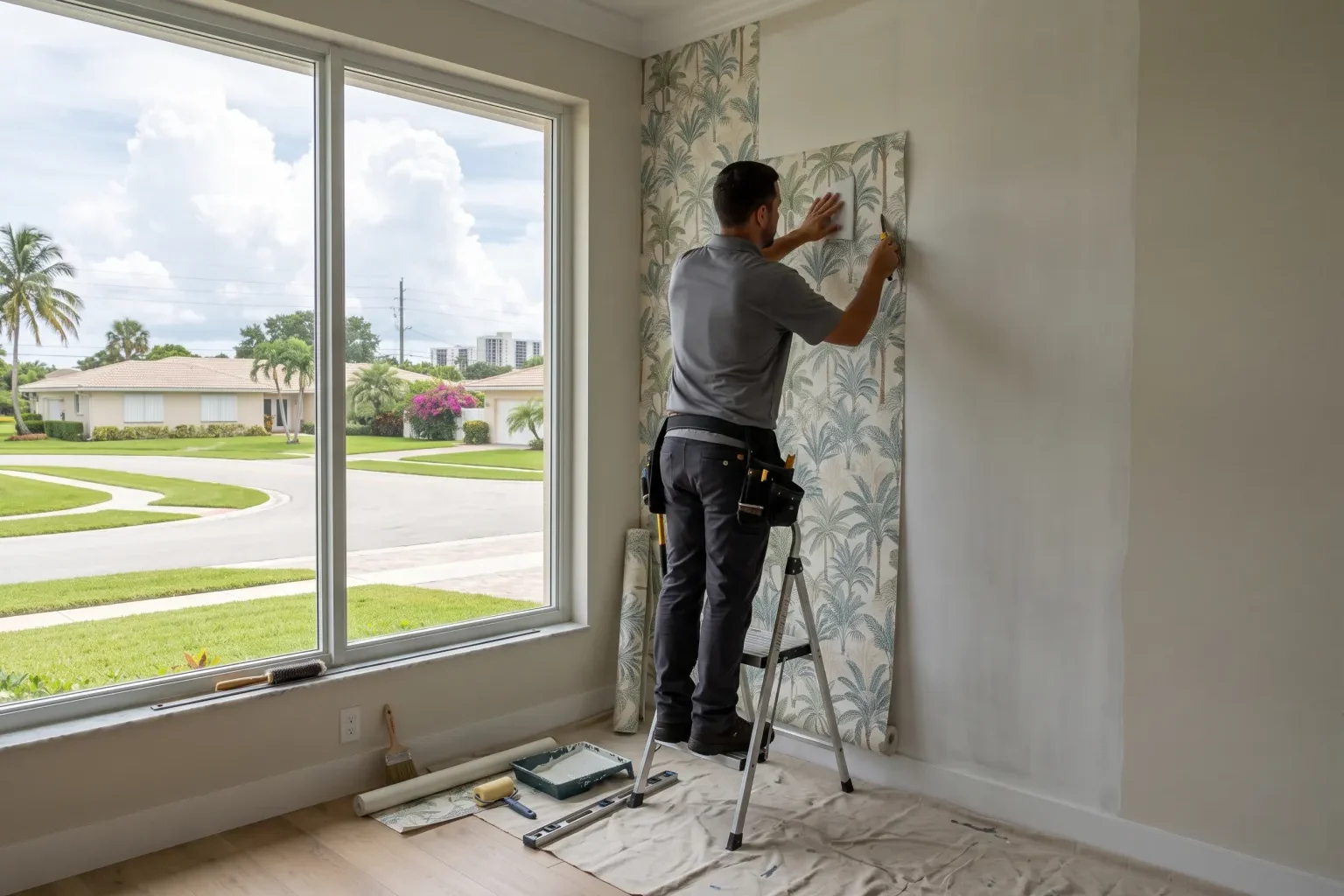
Wallpaper is a good fit for accent walls, powder rooms, bedrooms and dining rooms where you want pattern or texture that paint can't give. We repair and prime the walls first, then measure, match the pattern, butt the seams tight and trim cleanly. Cost depends on wall condition, paper type, pattern repeat, room size and ceiling height.
Wallpaper can change how a room feels in ways paint rarely does. Grasscloth adds quiet texture to a home office, a bold botanical makes a powder room memorable, and a vertical stripe can make a standard ceiling feel taller. Luxury Wallpaper Installer hangs residential wallcoverings for homeowners in Sunrise and nearby cities like Plantation, Tamarac, Lauderhill and Weston. This page covers when wallpaper is the right choice, how we prepare and prime your walls, what happens on installation day, which factors shape your quote, and how to care for the finished walls in South Florida's humid climate.
When Wallpaper Is the Right Choice for a Room
Wallpaper works best where you want a room to have character, not just color. It is a strong option when paint feels flat, when you want a pattern that would be impractical to stencil by hand, or when you want natural textures like grasscloth, linen or cork.
It is less ideal in spots that stay wet for long periods, such as walls right beside a shower, unless you choose a vinyl or other moisture-tolerant product made for that use. We are glad to talk through whether a specific room suits the paper you have in mind before you order.
- Powder rooms and half baths, where a bold pattern has big impact in a small space
- Accent walls behind a bed, sofa or dining table
- Dining rooms and entryways that set the tone for the rest of the home
- Home offices and libraries that benefit from added texture
- Ceilings, for a finished, layered look
- Nurseries and kids' rooms, using durable, washable papers
How We Prepare and Prime the Walls
Most of the quality in a wallpaper job comes from the preparation. Paper shows every bump, crack and ridge underneath it, so we get the surface right before the first strip goes up.
We start by protecting floors and furniture, removing switch plates and outlet covers, and turning off power to the affected outlets. If there is old wallpaper, we remove it along with any leftover adhesive, since new paper does not bond well over old glue. Next we patch holes, fill cracks and skim coat rough or damaged areas, then sand everything smooth.
Once the wall is smooth and clean, we apply a wallcovering primer suited to your paper. Primer helps the adhesive grip, lets us slide strips into place for precise seams, and makes future removal much easier without tearing the drywall.
Moisture matters here. South Florida has no fully dry season, and from May through October the weather is hot, humid and wet with frequent afternoon thunderstorms. We let patches and primer cure fully before hanging, and we recommend keeping your air conditioning running during and after installation. If your home had any water intrusion during hurricane season, which runs from June 1 to November 30, we check the walls for dampness and want the source fixed before we cover anything.
Our Installation Process, Step by Step
Every room is a little different, but the sequence we follow stays consistent. Taking it in order is what keeps patterns aligned and seams nearly invisible.
- Measuring: We measure each wall's height and width, note windows, doors and built-ins, and confirm you have enough rolls from the same batch, accounting for the pattern repeat and waste.
- Planning the layout: We decide where the pattern should be centered, usually on the focal wall or above a fireplace or bed, and where the final mismatched seam will fall, typically in a less visible corner.
- Plumb line: We mark a true vertical line for the first strip, since walls and corners are rarely perfectly straight.
- Pattern matching: We cut strips in order and line up each one with the last, whether the paper is a straight match, a drop match or a random match.
- Seams: We butt edges tightly rather than overlapping them, then gently roll the seams so they lie flat without squeezing out adhesive or stretching the paper.
- Trimming: We trim cleanly at the ceiling, baseboards, windows and door casings with fresh blades, and cut neatly around outlets and switches.
- Cleanup: We wipe away surface adhesive, reinstall covers, and clear the room so it is ready to use.
What Affects the Cost
Every wallpaper project is quoted individually because the work involved varies so much from one room to the next. These are the main factors that shape your estimate.
- Wall condition: Smooth, sound walls need little prep. Old paper, textured finishes, cracks or damage add removal, skim coating and sanding time.
- Paper type: Prepasted and unpasted papers, vinyls, grasscloth, silks, murals and hand-printed papers each handle differently, and delicate materials take more care.
- Pattern repeat: Large repeats and drop matches take longer to plan and align, and they create more waste per wall.
- Room size: More wall area means more strips to cut, match and hang, and lots of windows, doors or corners add detailed trimming.
- Ceiling height: Tall walls, stairwells and ceilings require scaffolding or extra ladder setup and slow the work down.
How to Care for Your Finished Walls
Give new wallpaper time to settle. Keep the room at a steady, air-conditioned temperature for the first several days and avoid pressing on seams while the adhesive cures. Small bubbles often flatten on their own as the paper dries.
For everyday cleaning, dust with a soft, dry cloth or a vacuum brush attachment. Washable and vinyl papers can be wiped with a damp sponge and mild soap, but grasscloth, silk and other natural fibers should stay dry, so blot spills right away. Run bathroom fans during and after showers, keep humidity in check during the wet summer months, and keep a leftover piece of paper for future touch-ups. If a seam lifts, call us rather than gluing it yourself, since the wrong adhesive can stain.
Wallpaper Installation by city
- Wallpaper Installation in Lauderhill
- Wallpaper Installation in Plantation
- Wallpaper Installation in Lauderdale Lakes
- Wallpaper Installation in Tamarac
- Wallpaper Installation in North Lauderdale
- Wallpaper Installation in Davie
- Wallpaper Installation in Fort Lauderdale
- Wallpaper Installation in Oakland Park
- Wallpaper Installation in Wilton Manors
- Wallpaper Installation in Cooper City
- Wallpaper Installation in Dania Beach
- Wallpaper Installation in Margate