
The short answer
Grasscloth is a natural-fiber wallcovering that suits low-moisture rooms like living rooms, bedrooms, dining rooms, and offices. A good result depends on smooth, primed walls, careful handling to avoid paste stains, and planned seam placement. Cost depends on wall condition, the grasscloth you choose, any pattern repeat, and room size and ceiling height.
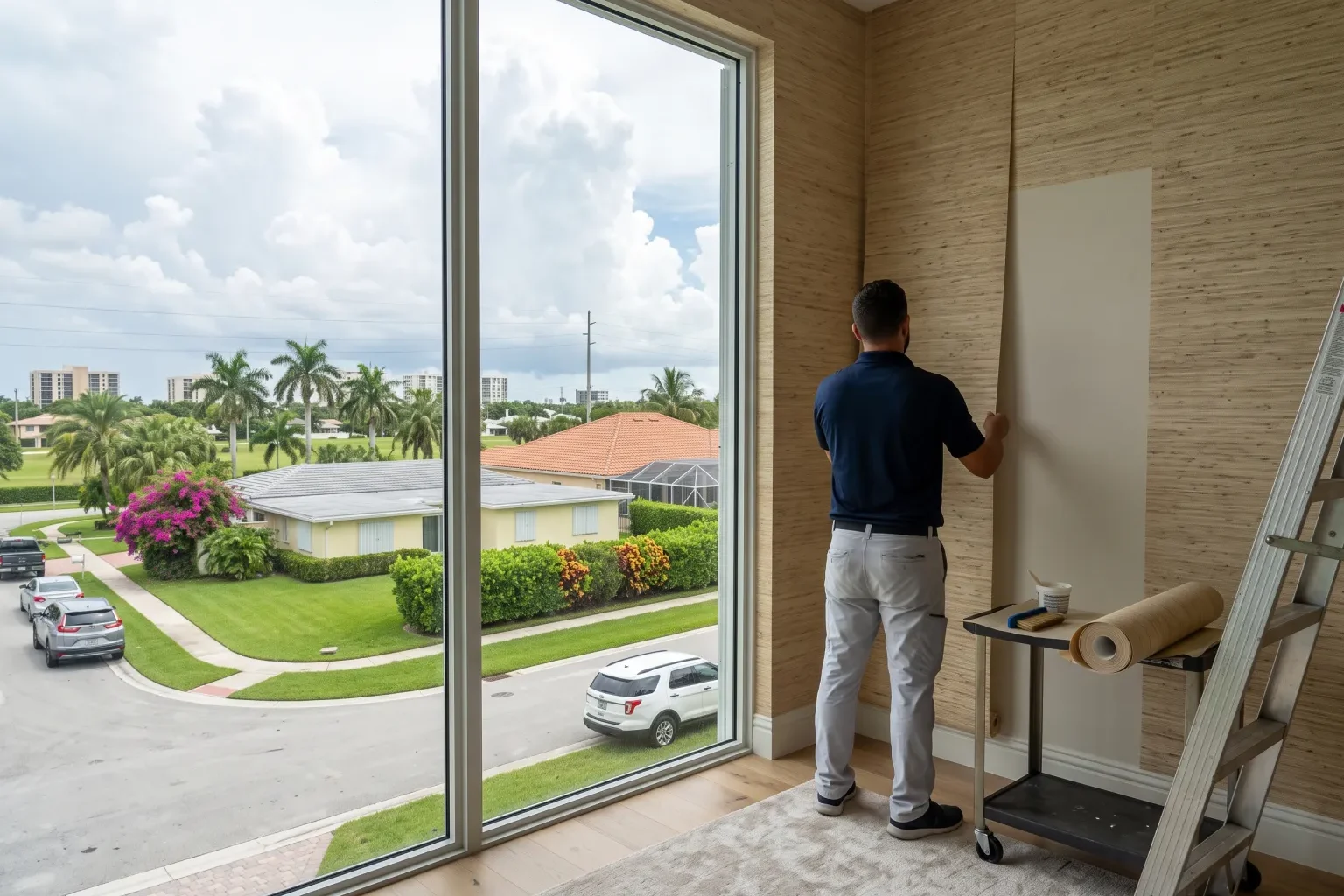
Grasscloth brings real texture to a wall. It is woven from natural fibers like sisal, jute, arrowroot, hemp, or seagrass and backed with paper, so every roll has slight variations in color and weave. That character is the reason people choose it, and it is also why grasscloth is less forgiving to hang than standard vinyl or paper. Luxury Wallpaper Installer hangs grasscloth for homeowners in Sunrise and nearby cities across Broward County. This page explains when grasscloth suits a room, how we prepare the walls, how the installation works, what affects the cost of your project, and how to keep the finished walls looking good in a South Florida home.
When Grasscloth Is the Right Choice for a Room
Grasscloth works best where you want warmth and texture and the room stays fairly dry. It softens sound slightly, hides minor surface flaws better than flat paper, and pairs well with both coastal and modern interiors. Because the fibers are natural, you will see visible seams and some shade shifts from panel to panel. Most people who love grasscloth see that as part of its appeal, but it helps to know that going in.
South Florida climate matters here. From May through October, the weather is hot, humid, and wet, with frequent afternoon thunderstorms. Natural fibers absorb moisture, so we generally steer grasscloth away from full bathrooms, laundry rooms, and walls right behind a stove or sink.
- Good fits: living rooms, dining rooms, bedrooms, home offices, entryways, and accent walls
- Use with caution: powder rooms with good ventilation and no shower
- Usually not recommended: full bathrooms, kitchen backsplash areas, and rooms without steady air conditioning
- Consider sun exposure: natural dyes can fade in strong direct light, so west-facing walls with bright windows may need shades or UV film
How We Prepare and Prime the Walls
Grasscloth shows what is underneath it more than people expect, especially at the seams. Prep is where most of the quality of the final job comes from.
We start by checking the walls for old wallpaper, loose paint, cracks, nail holes, patches, and texture. Many South Florida homes have knockdown or orange-peel texture, which can show through thin grasscloth and weaken adhesion. Depending on what we find, we may skim coat the wall to make it smooth, or we may install a lining paper first to give the grasscloth an even base.
After repairs dry and are sanded, we apply a wallpaper primer made for this purpose. Primer helps the paste grab, allows the panels to slide into place during hanging, and makes future removal much easier without damaging the drywall. Because grasscloth seams can open slightly and show a hairline of wall, we often tint the primer close to the background color of the grasscloth so any gap blends in.
Our Installation Process, Step by Step
Every product has its own manufacturer instructions, and we follow them. The general process looks like this:
- Measuring: We measure each wall, account for windows, doors, and outlets, and confirm how many rolls you need. Grasscloth should come from the same production run so colors match as closely as possible.
- Inspecting the rolls: Before cutting, we unroll and check the material for defects or obvious color differences, and we number the panels in order.
- Layout and seam planning: We plan where seams will fall so they land away from focal points and so narrow slivers do not end up at corners or beside windows.
- Pattern matching: Most plain grasscloth has no pattern to match, so we work to keep color transitions gradual. Some manufacturers recommend reversing every other panel. For printed grasscloth with a repeat, we align the design across each seam, which can require extra material.
- Pasting: We apply paste to the back evenly and carefully. Paste or water on the face of grasscloth can leave stains that cannot be wiped off, so we keep the front clean throughout.
- Hanging and seams: Panels are set plumb, smoothed with tools that will not crush the fibers, and butted tightly at the seams.
- Trimming: We trim at the ceiling, baseboards, and around openings with fresh blades to get clean edges without fraying.
- Cleanup and walkthrough: We remove outlet covers before hanging, reinstall them after, and walk the room with you when we finish.
What Affects the Cost of a Grasscloth Project
Every grasscloth job is quoted based on the specific room. These factors have the biggest effect:
- Wall condition: Smooth, sound walls need less work. Removing old wallpaper, repairing damage, skim coating texture, or adding lining paper adds time and materials.
- Paper type: Delicate weaves, thin fibers, and unbacked or specialty grasscloths take more care to handle and hang.
- Pattern repeat: Printed grasscloth with a large repeat produces more waste and requires more time aligning seams.
- Room size: More wall area means more material and labor. Many windows, doors, and cutouts also add trimming time.
- Ceiling height: Tall walls and stairwells may need scaffolding or extra setup, and long panels are harder to handle.
Caring for Your Grasscloth Walls
Grasscloth is not scrubbable, so care is mostly about prevention and gentle cleaning.
Keep your air conditioning running to control indoor humidity, especially during the wet season. Hurricane season runs from June 1 to November 30, and if a storm causes a power outage, humidity can climb indoors quickly. Once power returns, run the AC to dry the room out and check the walls for lifting seams.
- Dust every few months with a soft brush attachment on a vacuum or a dry microfiber cloth
- Blot spills immediately with a clean, dry cloth and do not rub or use water
- Keep furniture a few inches from the wall to prevent rubbing marks
- Use window treatments to reduce fading from strong sun
- Call us if a seam lifts so it can be reattached before it worsens
Grasscloth Wallpaper Installation by city
- Grasscloth Wallpaper Installation in Lauderhill
- Grasscloth Wallpaper Installation in Plantation
- Grasscloth Wallpaper Installation in Lauderdale Lakes
- Grasscloth Wallpaper Installation in Tamarac
- Grasscloth Wallpaper Installation in North Lauderdale
- Grasscloth Wallpaper Installation in Davie
- Grasscloth Wallpaper Installation in Fort Lauderdale
- Grasscloth Wallpaper Installation in Oakland Park
- Grasscloth Wallpaper Installation in Wilton Manors
- Grasscloth Wallpaper Installation in Cooper City
- Grasscloth Wallpaper Installation in Dania Beach
- Grasscloth Wallpaper Installation in Margate